
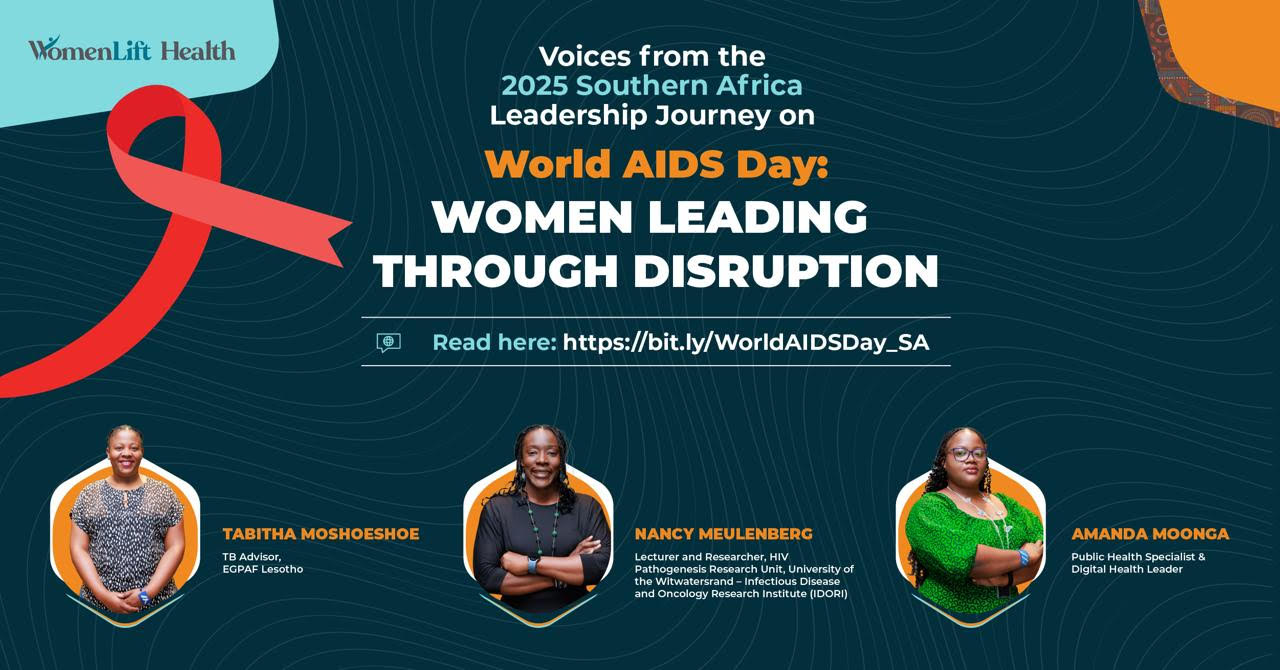
Women Leading Through Disruption
Southern Africa continues to shoulder one of the greatest HIV burdens worldwide, while also driving some of the world’s most innovative responses. This World AIDS Day, under the theme “Overcoming disruption, transforming the AIDS response,” we’re reminded that progress is only as strong as the leadership driving it.
To bring this year’s theme to life, we spoke with three women leaders advancing the HIV response across research, frontline programming, and digital health innovation.
Nancy Meulenberg – Lecturer and Researcher, HIV Pathogenesis Unit, University of the Witwatersrand – Infectious Diseases and Oncology Research Institute (IDORI)
As a woman leader in infectious diseases research, what role do you believe gender-inclusive leadership plays in accelerating breakthroughs and strengthening the resilience for HIV response?
Having diverse leadership teams, especially those including women, is essential. Women bring a range of perspectives and lived experiences that drive innovation and strengthen relevance. This fosters trust, improves equity, and supports environments where both researchers and communities feel valued. Gender-inclusive leadership dismantles stigma and strengthens the sustainability of HIV responses.
What do you believe women leaders uniquely contribute to the future of HIV research, and how can the sector better support their growth and influence?
Women leaders bring unique value to HIV research by ensuring diverse and community-grounded perspectives, fostering collaboration, and prioritizing equitable solutions for those most affected. Leadership by women has been key to driving advances in treatment, prevention, and advocacy because women leaders are often more attuned to the needs of women, children, and marginalized communities.
To better support women’s growth and influence, the sector should invest in mentorship and leadership development programmes, ensure equal opportunities and visibility, and actively address barriers such as underrepresentation and bias. Creating inclusive environments where women’s expertise is valued and amplified will help innovation and progress flourish.
Tabitha Moshoeshoe – TB Advisor, EGPAF Lesotho
How does women’s leadership, particularly in frontline advisory roles shape more resilient, patient centred HIV/TB systems in high-burden countries?
Women frontline leaders play a powerful role in influencing HIV/TB policy because they carry the realities of patients and communities directly into decision-making spaces. Their day-to-day experiences with stigma, caregiving burdens, treatment barriers, and gender-based vulnerabilities allow them to shape policies that are practical, person-centred, and grounded in lived experience. By highlighting what truly works at the facility and community level, they help refine guidelines, strengthen programme design, and ensure that resources and interventions reach those who need them most. Their leadership makes HIV/TB policy more responsive, equitable, and effective.
Why is it critical to elevate more women into decision-making roles in HIV and TB programmes, and what impact does this have on communities and health outcomes?
Answer: Elevating women into decision-making roles is essential because they understand the social, gender, and caregiving realities that shape vulnerability to HIV and TB. Their leadership ensures that programmes address real barriers, stigma, access to services, maternal health needs, adolescent risks, and community-level inequities. Women leaders tend to prioritise integrated, person-centred care, stronger PMTCT, community engagement, and policies that protect the most underserved. This leads to earlier diagnosis, better treatment adherence, improved maternal and infant outcomes, and greater trust in health systems. Ultimately, when women lead, HIV/TB programmes become more equitable, more accountable, and more effective for entire communities.
Amanda Moonga – Public Health Specialist & Digital Health Leader
As a woman leader in digital public health, how do you ensure that emerging technologies empower communities rather than increase inequalities in access and care?
I focus on designing digital tools with the people who will use them in mind. Community input, simple interfaces, and solutions that work even in low-resource settings help ensure that technology reduces gaps instead of widening them. For digital health to be effective, it has to fit naturally into how communities live and access care. We need to keep driving solutions that put equity at the centre.
What opportunities are there for women leaders to shape the digital transformation of HIV services, and what support structures are most needed to amplify their impact?
Women are well placed to shape digital HIV services because we understand both the technology and the realities faced by clients and frontline workers. Whether it’s virtual adherence support or digital consultations, there is room for women to lead meaningful innovation. What will strengthen this impact is better mentorship, flexible funding, and more opportunities for women to step into senior decision-making roles. With that support, women can build a digital health landscape that is inclusive, resilient, and grounded in community needs. It’s time to elevate women leaders so digital transformation truly serves communities.
Together, these voices show the growing force of women’s leadership across Southern Africa’s HIV landscape. Whether advancing science, shaping policy, or reshaping digital systems, women leaders are redefining what resilient HIV responses look like. Their insights point to a shared vision, one with an HIV response that listens, adapts, includes, and endures, even in the face of disruption.