Conflict Dynamics: Building Better Relationships

PowerUp Workshop Series

The PowerUp Workshops series are free and open to mid-career women working in public health in all the regions we work. The workshops are hosted virtually, focus on developing leadership skills, and fostering meaningful connections between women leaders in health within a regional context. The topics rotate with each workshop. We encourage women leaders in public health in each region to join us, and use these workshops as an opportunity to learn, engage with other women leaders, and build community.

Conflict Dynamics: Building Better Relationships

October 17th, 2025 @3-5pm WAT

WomenLift Health in partnership with WILAN is hosting an interactive virtual workshop to provide mid-career women working in public health in Nigeria with the information and tools to move towards a more productive and sustainable way of managing the boundaries between their work and personal lives.

Conflict is inevitable, unavoidable, complex, and can be mentally, emotionally and physically draining, and difficult to navigate. Conflict can also negatively impact personal progress and goals, team dynamics, and workplace culture. Research shows that women tend to avoid disagreement, corresponding to socially constructed norms of femininity.

Conflict can also serve a purpose. It can generate new solutions, build better relationships, and increase job satisfaction. It is key to innovation and can be a critical component of risk mitigation. Conflict follows a predictable pathway and will diverge to become either constructive or destructive. The question for this workshop is: How do we navigate the path of conflict so that it is constructive, and we can walk away feeling positive, relaxed, and even motivated?

In this session, for beginners and seasoned practitioners alike, we will explore the Conflict Dynamics Model by unpacking the behaviors and actions that influence interpersonal conflict. Attendees will reflect on and map out a recent work disagreement by focusing on the active, passive, constructive and destructive response pathways. We will understand how to identify our own “hot buttons” and contributions to either escalating or de-escalating conflict.

PowerUp Objectives:

This session will unpack the behaviors and actions that influence interpersonal conflict at the workplace. You will:

  1. Examine how your approach to conflict affects your health, and the health of your relationships at work and at home
  2. Explore how you can shift to a more positive, constructive response in conflict situations

Registration Details

Please note that to enroll in the session, you should complete all sections of the registration form.

You are eligible for the workshop if you meet the following criteria:

  • Identify as a woman
  • Has 10-25 years of work experience and/or identifies as someone in mid-career in their institutions*
  • Work in a role that focuses on public health policy, practice, and/or research (your work and partnerships serve populations at the national or regional level in Nigeria and may include practicing public health in hospitals and health centers, producing research and innovation, creating or implementing policy, and managing teams/departments or projects/grants.)

This virtual workshop will be conducted in the English language and is free of cost.

WomenLift Health PowerUp Workshops are interactive. By signing up, you agree to participate in the full session, which includes plenary discussions and breakout group activities.

Enrollment will be on a first-come-first-served basis, as spots are limited.

*Although women at all career stages are welcome to register, we believe participants who are at the mid-career stage will benefit most, as the content of the workshop has been designed with mid-career women professionals in mind (10–25 years of experience working in the public health sector). If the number of registrants exceeds our capacity, women who are within the preferred experience range will be given priority.

Registrants should await an email confirming their spot in the workshop. Please check your spam folders if you did not receive an email.
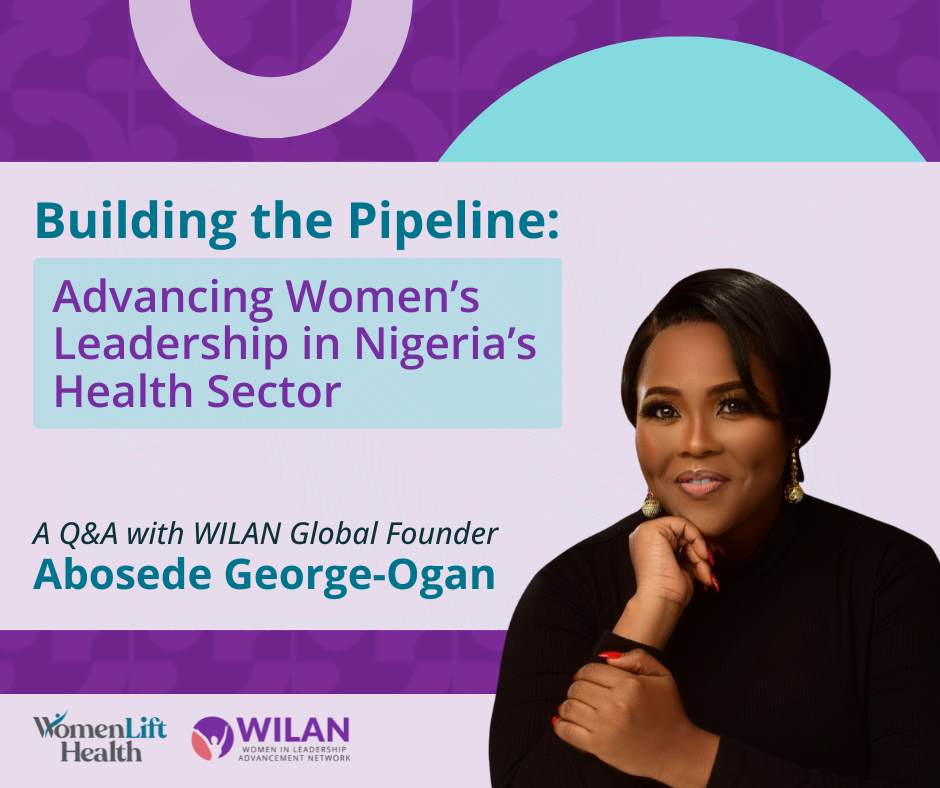
When women aren’t at the policy table, we miss critical insights that shape real-world health outcomes

In this Q&A, Abosede George-Organ, Founder of WILAN Global, shares the inspiration behind WILAN, the significance of their partnership with WomenLift Health, and why investing in women’s leadership, especially in health, is key to building more inclusive and effective systems.

Can you tell us about WILAN and its mission to advance women in leadership in Nigeria?

WILAN, Women in Leadership Advancement Network, was born out of a personal realisation that women in Nigeria face systemic barriers to leadership. Our mission is to equip women with the skills, support, and platforms they need to lead confidently across political, economic, and public life. Through training, mentorship, policy advocacy, and media engagement, we are building a strong pipeline of women who are ready to step into decision-making roles.

Why is this partnership with WomenLift Health important to your mission? What excites you most about the partnership and the launch of the inaugural Leadership Journey in Nigeria?

This partnership with WomenLift Health aligns perfectly with our mission at WILAN of advancing gender-balanced leadership in critical sectors. What excites me most is the opportunity to localise a globally proven model and make it contextually relevant for Nigerian women, especially in the health sector. It’s about creating a safe, empowering space for women to grow as leaders while addressing the unique challenges they face in our national and international health landscape.

What unique challenges do women leaders face in the health sector in Nigeria?

Women dominate frontline healthcare roles in Nigeria, yet they are grossly underrepresented in leadership. They face challenges ranging from unconscious bias and limited access to leadership development, to balancing professional demands with cultural expectations. Additionally, the lack of mentorship and institutional support structures makes it even harder for women to rise to executive decision-making roles in health.

You’ve worked across multiple sectors and have seen firsthand the effects of women being excluded from decision-making processes. Can you share some examples of how this exclusion has affected health outcomes in Nigeria?

When women are excluded from leadership, health policies often lack the nuance required to address women’s real-world needs. For instance, during my time working with government and development partners, I observed how maternal health programs often failed to account for local realities like transportation, safety, and economic barriers simply because women weren’t at the policy table. We miss critical insights when decision-making isn’t inclusive.

Why is it important to invest in leadership development for women in Nigeria, particularly in health and other critical sectors?

It is important because leadership determines impact. Studies show that organisations with gender-diverse leadership are more effective, equitable, and sustainable. In sectors like health, where women make up most of the workforce, it’s only logical and just to ensure they also lead. Investing in their development is not just a gender issue; it’s a development imperative. When women lead, everyone benefits.

As a leader yourself, what message would you like to share with women leaders who are aspiring to create transformative change in their fields?

You don’t have to wait for permission to lead. Your experiences, voice, and perspective matter. Stay curious, stay committed, and surround yourself with people who believe in your vision. Leadership isn’t about having all the answers; it’s about having the courage to ask bold questions and act. Lead from where you are, and lift others as you rise.

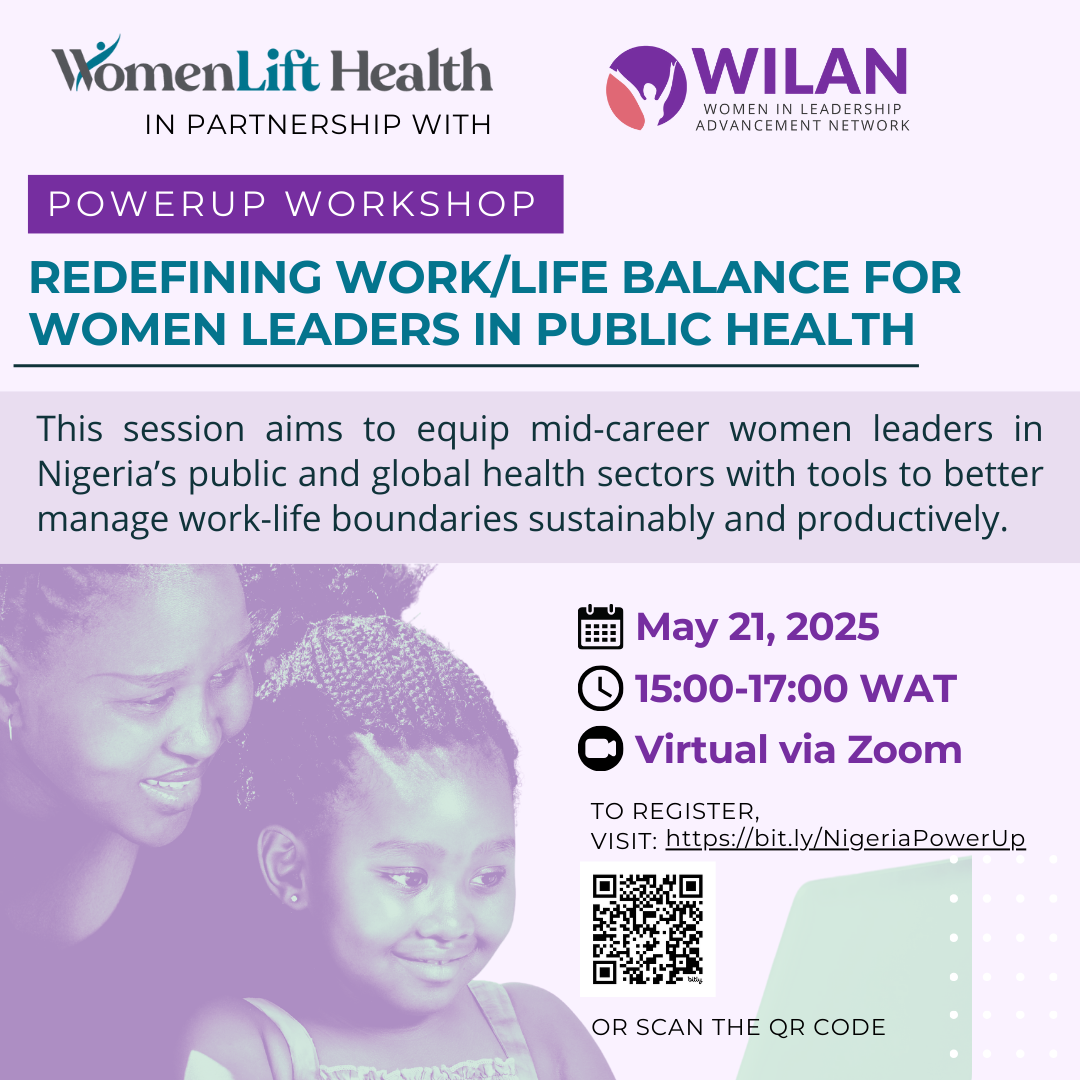
Redefining Work/Life Balance for Women Leaders in Public Health

PowerUp Workshop Series

The PowerUp Workshops series are free and open to mid-career women working in public health in all the regions we work. The workshops are hosted virtually, focus on developing leadership skills, and fostering meaningful connections between women leaders in health within a regional context. The topics rotate with each workshop. We encourage women leaders in public health in each region to join us, and use these workshops as an opportunity to learn, engage with other women leaders, and build community.

WomenLift Health in partnership with WILAN is hosting an interactive virtual workshop to provide mid-career women working in public and public health in Nigeria with the information and tools to move towards a more productive and sustainable way of managing the boundaries between their work and personal lives.

Women leaders in public and public health are dealing with complex challenges, competing demands, fast-paced work environments, and the burden of domestic responsibilities without additional resources or support. The challenge of balancing work and personal priorities has been heightened following the onset of the Covid-19 pandemic in 2020.

“Balance” may suggest that “work” is competing with “life,” implying that one is always working against the other, rather than functioning in harmony, often evoking a tightrope walk between the two. This workshop aims to reframe this notion into a more integrative and harmonious approach, rather than striving for a neat 50/50 split.

This session aims to provide mid-career women leaders working in public and global health in Nigeria with the information and tools to move towards a more productive and sustainable way of managing the boundaries between their work and personal lives.

PowerUp Objectives:

This session will help you develop a more sustainable approach towards maintaining harmony between your work and personal life. You will:

  1. Explore your preferences and how you prioritize your life;
  2. Understand the strengths and challenges associated with your personal priorities and preferences; and
  3. Identify and build a more harmonized approach that is tailored to your preferences.

Registration Details

21  May @ 3:00 pm – 5:00 pm WAT

Please note that in order to enroll in the session, you should complete all sections of the registration form.

You are eligible for the workshop if you meet all of the following criteria:

  • Identify as a woman
  • Has 10-25 years of work experience and/or identifies as someone in mid-career in their institutions*
  • Work in a role that focuses on public health policy, practice, and/or research (your work and partnerships serve populations at the national or regional level in Nigeria and may include practicing public health in hospitals and health centers, producing research and innovation, creating or implementing policy, and managing teams/departments or projects/grants.)

This virtual workshop will be conducted in the English language and is free of cost.

WomenLift Health PowerUp Workshops are interactive. By signing up, participants agree to participate in the full session, which includes plenary discussions and breakout group activities.

Enrollment will be on a first-come-first-served basis, as spots are limited.

*Although women at all career stages are welcome to register, we believe participants who are at the mid-career stage will benefit most, as the content of the workshop has been designed with mid-career women health professionals in mind (10–25 years of experience working in the public health sector). If the number of registrants exceeds our capacity, women who are within the preferred experience range will be given priority.

Registrants should await an email confirming their spot in the workshop. Please check your spam folders if you did not receive an email.
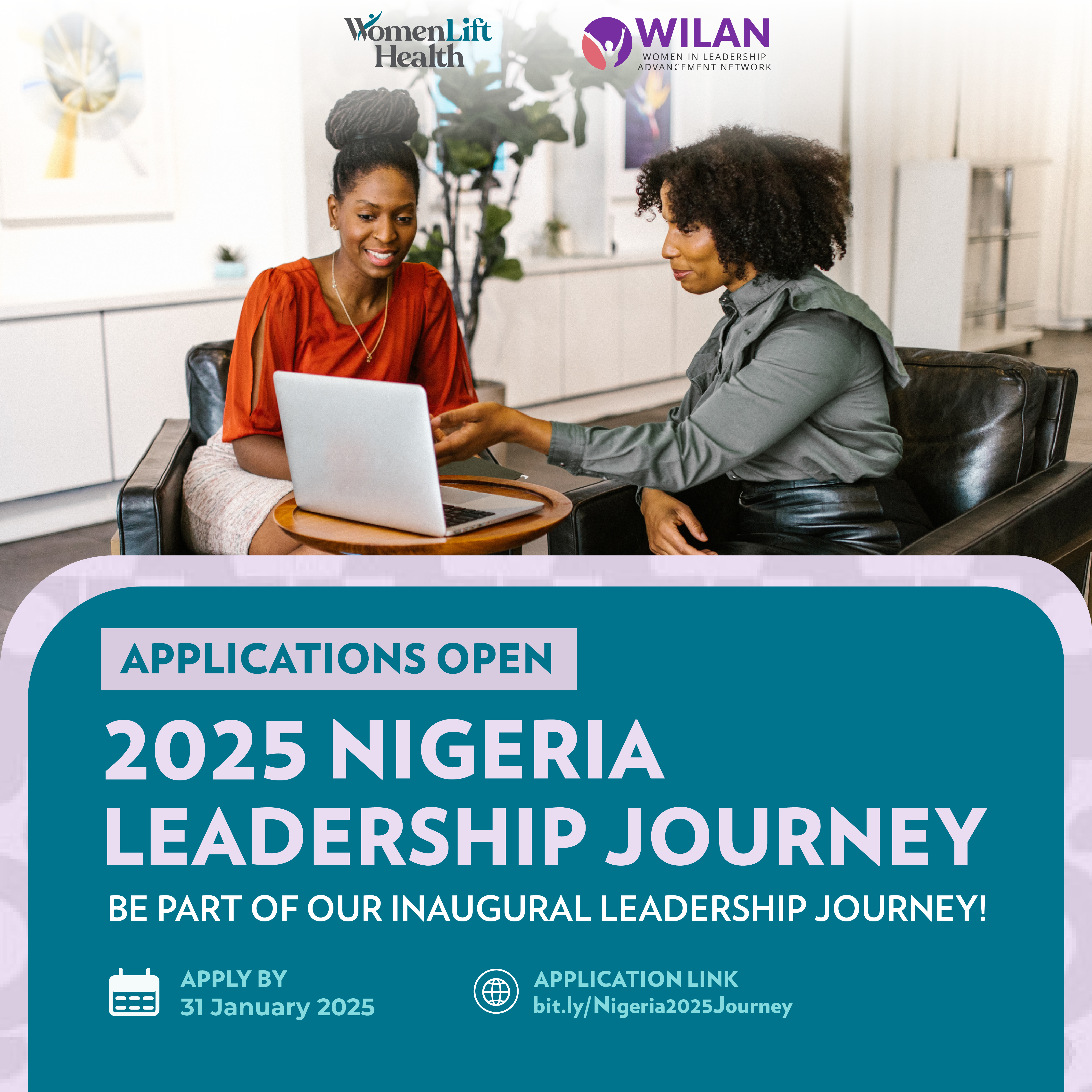
WomenLift Health and WILAN Partner to Advance Women’s Leadership in Health in Nigeria

WomenLift Health and the Women in Leadership Advancement Network (WILAN) have partnered to deliver leadership development programs for women working in the health sector in Nigeria.  

These programs include WomenLift Health’s Signature Leadership Journey, a fully funded, 12-month program designed to equip mid- to senior-level women leaders in health with the skills, confidence, and networks needed to drive change in their organizations and communities.  

“We are thrilled to partner with WILAN to bring more leadership development opportunities to Nigerian women in health” said Amie Batson, President of WomenLift Health. “This is an opportunity to support incredible women leaders so they are better equipped to address critical health challenges, driving transformative change in their communities, institutions, and across the country.”  

Women make up over 60% of Nigeria’s health workforce, but they are significantly underrepresented in leadership positions. A White Paper by WILAN on “The Role of Women’s Leadership in Strengthening Subnational Health Systems in Nigeria” identified several barriers to women’s leadership in the country’s health sector, including gender bias, cultural and religious norms, work-life balance issues, a lack of role models, and the typecasting of leadership as an inherently male trait, among others.

Yet, evidence shows that women leaders are more likely to prioritize research and action to serve women, children, and marginalized groups; address community needs; and allocate funds toward health and education. Women’s leadership is also linked to greater profitability, innovation, and better health outcomes. 

Abosede George-Ogan, Founder of WILAN Global said, “This partnership with WomenLift Health marks a pivotal moment in advancing women’s leadership in Nigeria’s health sector. By equipping women with the skills, networks, and confidence to lead, we are not just investing in individuals—we are strengthening health systems, improving outcomes for communities, and creating a future where women lead transformative change across the nation.”

Applications for the Nigeria Leadership Journey opened today and will close on 31 January 2025. Apply here to the Nigeria Leadership Journey.

About WomenLift Health  

Established in 2019, WomenLift Health works to improve health outcomes and gender equality by investing in women’s leadership in the health sector through a range of actions at the individual, institutional, and societal levels. This includes “Leadership Journeys,” which focus on equipping mid-career women with tools, along with peer, mentor, and coach support, to successfully use their voice, expertise, and leadership for impact. It includes deepening conversations and partnerships with senior leaders in health institutions and taking steps to prioritize gender equality. It also includes supporting/convening global conversations about the importance of women’s leadership, amplifying the voices of national and global health leaders, including at the biennial WomenLift Health Global Conference. WomenLift Health envisions a world where diverse, accomplished leaders collectively transform health outcomes. WomenLift Health currently works in East Africa, India, Nigeria, North America, and Southern Africa.    

About WILAN

Women in Leadership Advancement Network (WILAN) Global is a nonprofit organization that focuses on supporting women in leadership by providing them with valuable resources, essential tools, and a supportive network. WILAN’s vision is to inspire a shift to gender-balanced leadership across all levels of political, economic, and public life. To learn more, visit https://wilanglobal.org/

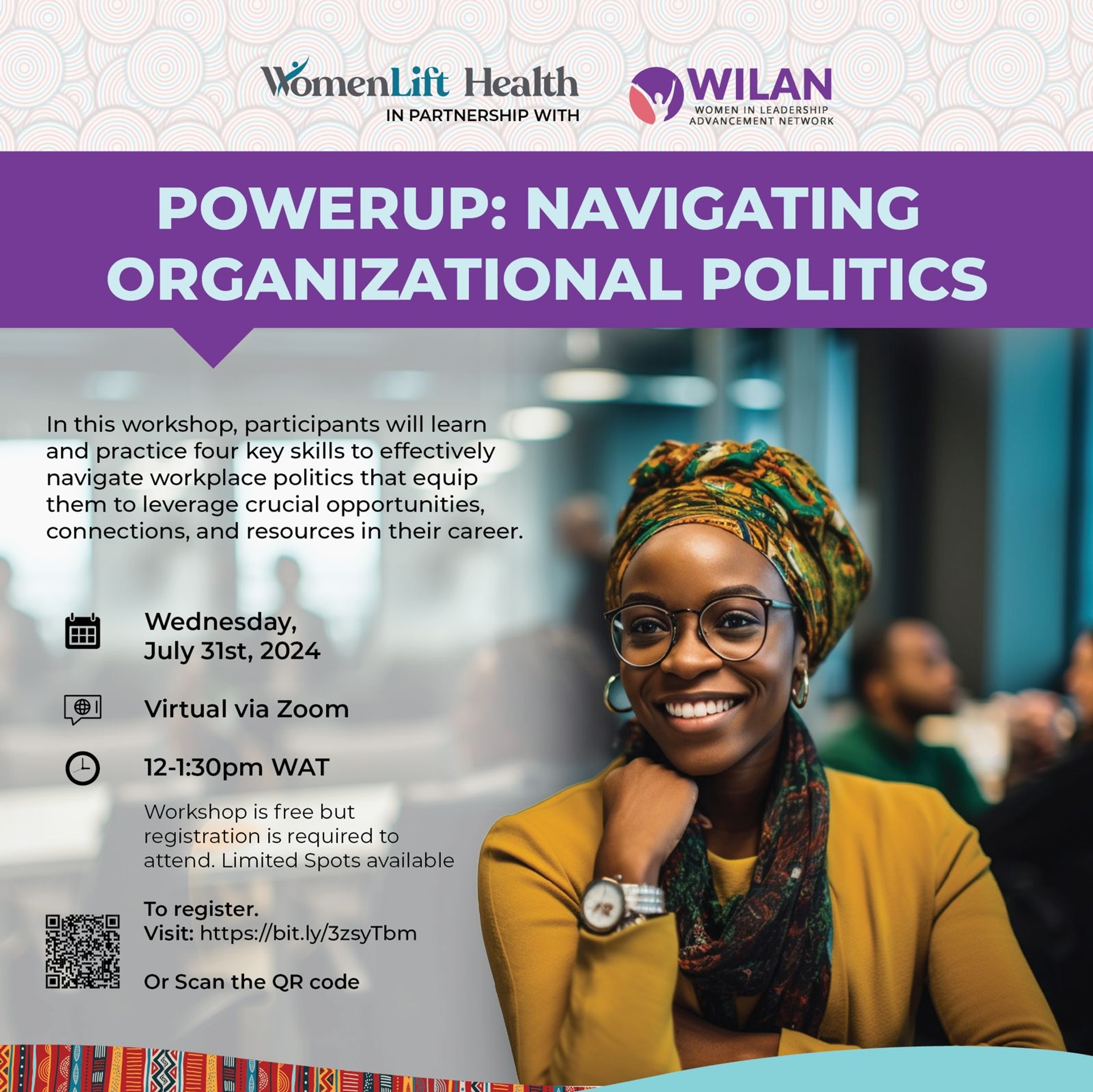
Navigating Organisational Politics

In this two-hour workshop, you will: 

  • Understand organisational politics—examine why it exists and how it functions; 

  • Increase your political savvy and practice four key skills to better navigate organisational politics; 

  • Assess your political environment and gain awareness of your mindset.

Developing political competence is an essential leadership skill. Being politically savvy or skilled informs our ability to leverage our influence to advance our own goals, as well as those of our teams and our organizations. The nature and intensity of organizational politics differs in each context. These politics are dynamic, explicit and implicit, and fundamental to the functioning of organizations. What are politics like in your context?

The negativity often associated with organizational politics creates hurdles to our ability and willingness to embrace them. The fact is that politics are natural. It would be naïve to deny that organizational politics can be potentially destructive, yet when leveraged strategically and effectively they advance our leadership efforts.

This session will help you reflect on and potentially reframe your relationship with organizational politics. The objectives of this session are to unpack what organizational politics actually are, to acknowledge that they can be burdensome, to recognize their value, and develop your ability to navigate them. Develop and refine politically savvy mindsets and skillsets which will enable you to navigate relationships more naturally and effectively. Join us to explore your political savviness and assess the political landscape in which you lead.

Registration Details

Wednesday, July 31, 2024 12:00 pm – 1:30 pm WAT

You are eligible for the workshop if you meet all of the following criteria:

  • Identify as a woman;

  • Live, work in, and are citizens of Nigeria;

  • Are health professionals (public or global health)

This virtual workshop will be conducted in English and is free of charge.

Enrollment will be on a first-come-first-served basis. Spots are limited. Note that submission of a registration form does not guarantee a spot in the workshop. Registrants should await an email confirming their spot in the workshop within two weeks of registering.

Although all career stages are welcome to register, we believe participants who are at the mid-career stage will benefit most since the content of the workshop has been designed with mid-career women health professionals in mind (10+ years of experience working in public and global health). If the volume of registrants exceeds our capacity, women who are within the desired experience range will be given priority.

Registrants should await an email confirming their spot in the workshop within two weeks of registering.