
Preterm birth remains a significant threat to maternal and neonatal health. Yet for decades, the markers used to identify high-risk mothers had been developed in Western populations and largely unvalidated for Indian women. Even where screening tools existed, they were costly, poorly generalized, and ill-suited to the diversity of India’s population.
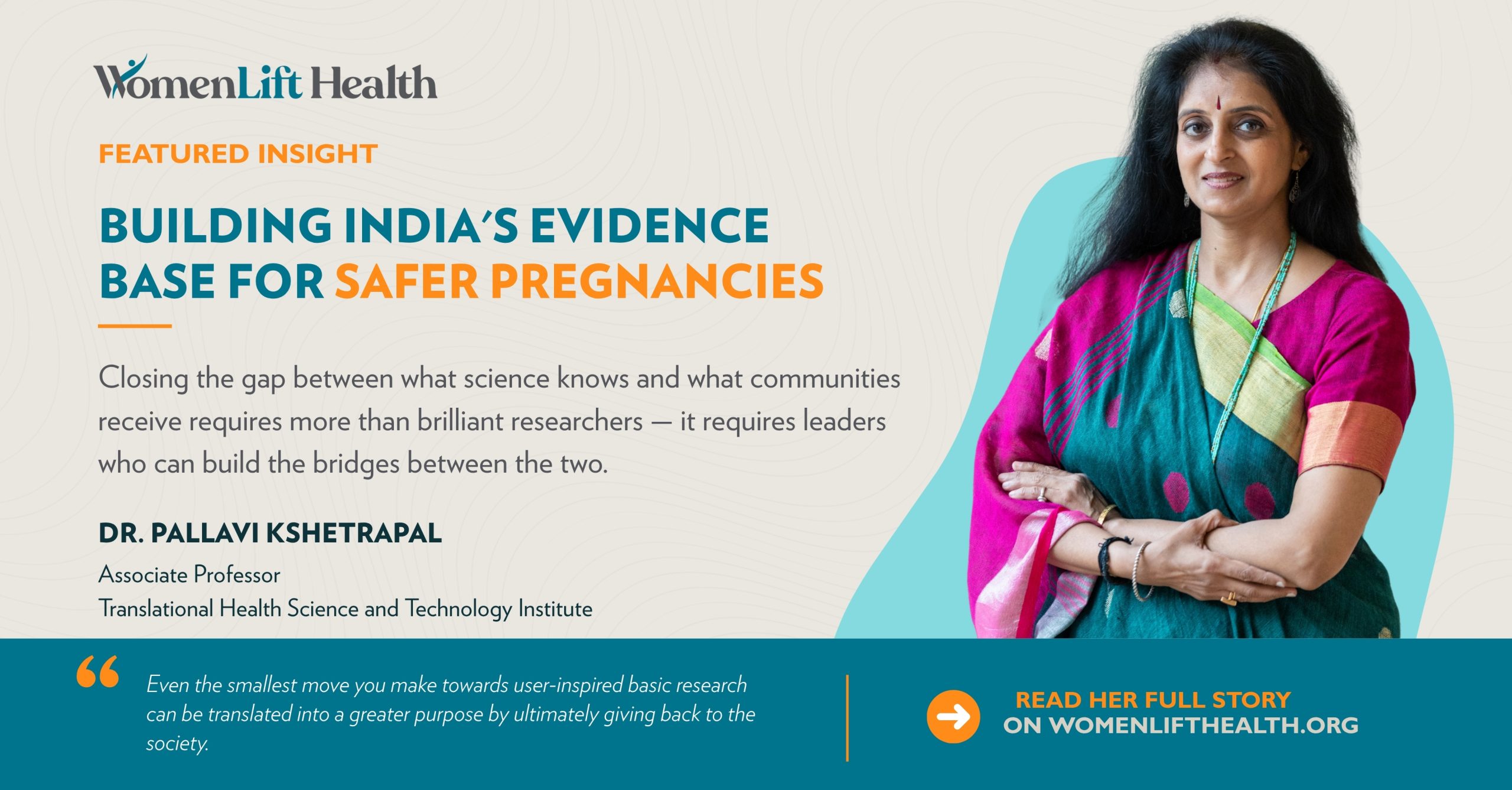
As an Associate Professor at the Translational Health Science and Technology Institute (THSTI) in New Delhi, Dr. Pallavi Kshetrapal leads the Lab of Perinatal Research — work she came to with a non-clinical yet a strong biomedical research background, immersing herself into clinical metabolomics and placental biology through years of hands-on learning. At the heart of this work is the GARBH-INi program, a large multidisciplinary cohort study that enrolled pregnant women at a district hospital in the North of India, collecting biological samples and clinical data across the full arc of pregnancy and delivery. Over more than a decade, Pallavi built the biorepository underpinning this platform, growing it from three freezers into a facility holding more than 100,000 unique samples from 12,000 mothers archived as 1.8 million aliquots. Her dedication, meticulous management skills, strong team-building abilities and scientific aptitude have played a pivotal role in establishing the THSTI biorepository as the first DBT-supported and first NABL-accredited biobank with ISO 20387:2018, ‘Biotechnology — Biobanking — General Requirements for Biobanking. The cohort produced one of the first rigorously established prevalence figure for preterm birth in India: 13.6%.
When Pallavi joined the WomenLift Health Leadership Journey, she arrived with that decade of work behind her, and a recognition that research at this scale cannot be done in silos. Coaching and learning touchpoints helped her build the negotiation and resilience that complex collaboration demands, learning both when to say no and when to hear it. Leadership qualities can be found in everyone, but with the help and support of WLH, she has started living and demonstrating them with confidence. “It has enabled me to collaborate more constructively within teams while fostering stronger connections with my peers and male allies. We have to find common ground to work together for a bigger cause.” She shared.
That collaborative foundation is already carrying the work forward. Her lab is now pioneering work on placental exosomes to identify a screening marker for late-onset preeclampsia, a condition for which no clinically established screening marker currently exists. She has initiated talks with clinicians and is writing grants to validate the work across three hospitals. “Even the smallest move you make towards user-inspired basic research can be translated into a greater purpose by ultimately giving back to society,” Pallavi shared.