
Across Uganda and much of Sub-Saharan Africa, health systems are rapidly digitizing. Governments have expanded from paper based to electronic medical records and adopted digital health systems. But gaps remain, many facilities still struggle with fragmented systems, workforce capacity, and limited digital infrastructure. Even the most ambitious new facilities can fall short of their potential when digital systems are treated as an afterthought.
Through the WomenLift Health Leadership Journey, Carolyn Kamasaka strengthened her ability to move beyond the role of technical implementer and act with confidence at high-level decision-making tables, using her voice and expertise to influence the choices that shape health systems at scale, not just the systems themselves.
That shift came at a pivotal moment. As Uganda began constructing a major national referral hospital (UPDF National Referral Hospital), Carolyn recognized the risk of building world-class infrastructure without a strong digital backbone. Rather than waiting to be invited into the conversation, she approached the senior leadership directly and made the case for embedding a comprehensive Health Information Management System from the outset. “It took courage and confidence to approach the leadership and tell them: you will need my skill set to run this hospital,” Carolyn reflected.
With over a decade of experience implementing digital health solutions across Uganda and beyond, and a track record leading national and community-level initiatives, Carolyn knew exactly what the hospital needed. She is now positioned to lead the hospital’s digital infrastructure implementation when it opens, ensuring that Uganda’s newest major health facility is built right the first time.
“I want the end user, the health worker in the community, the nurse in children’s clinic, to be able to use these digital tools. There cannot be efficiency if you do not build the capacity of the people that are going to use the digital tools,” she shared.
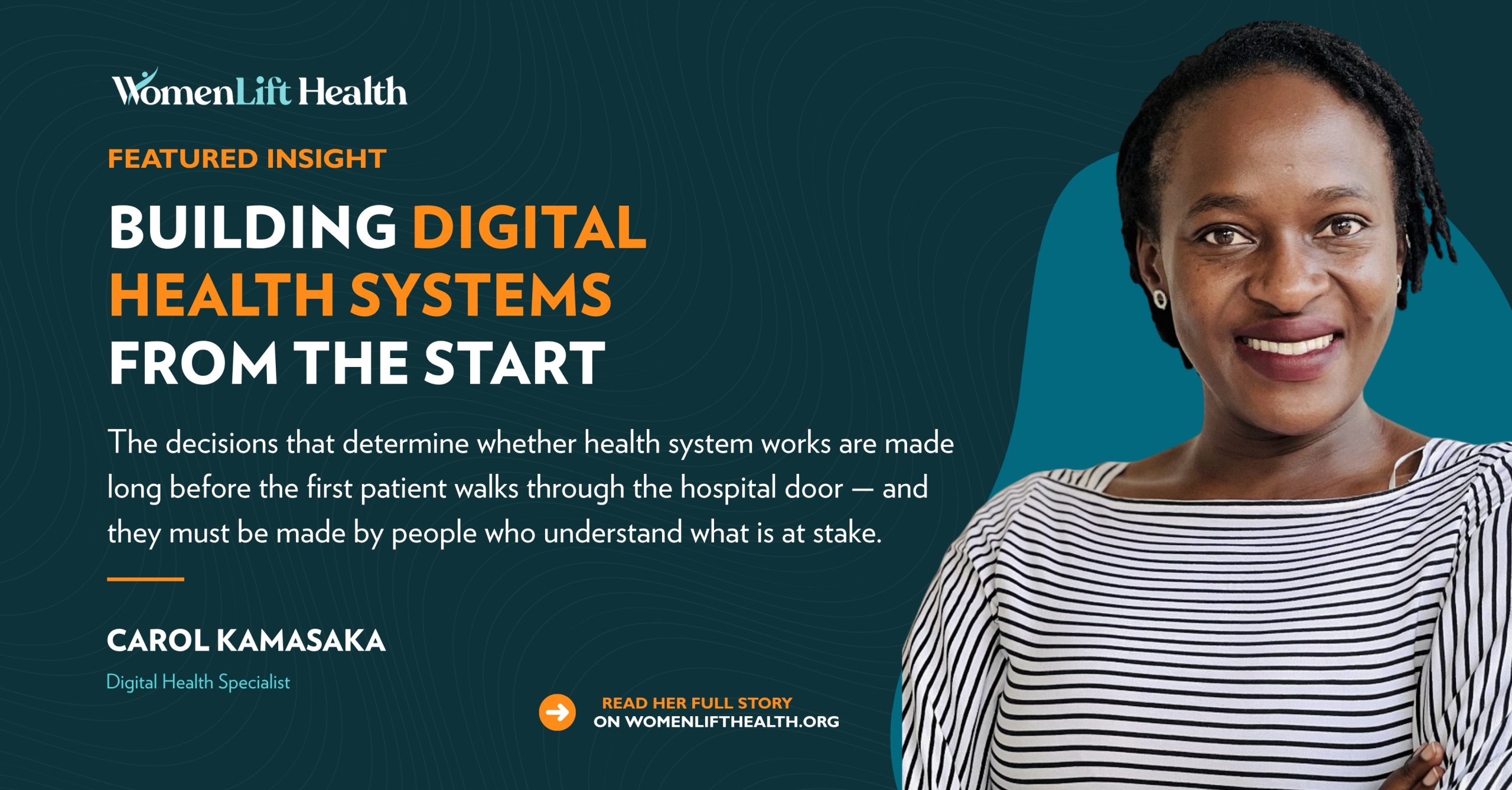
Carolyn’s story illustrates something important: the decisions that determine whether health systems work is often made long before patients arrive. Investing in women leaders ensures those decisions are made well.