
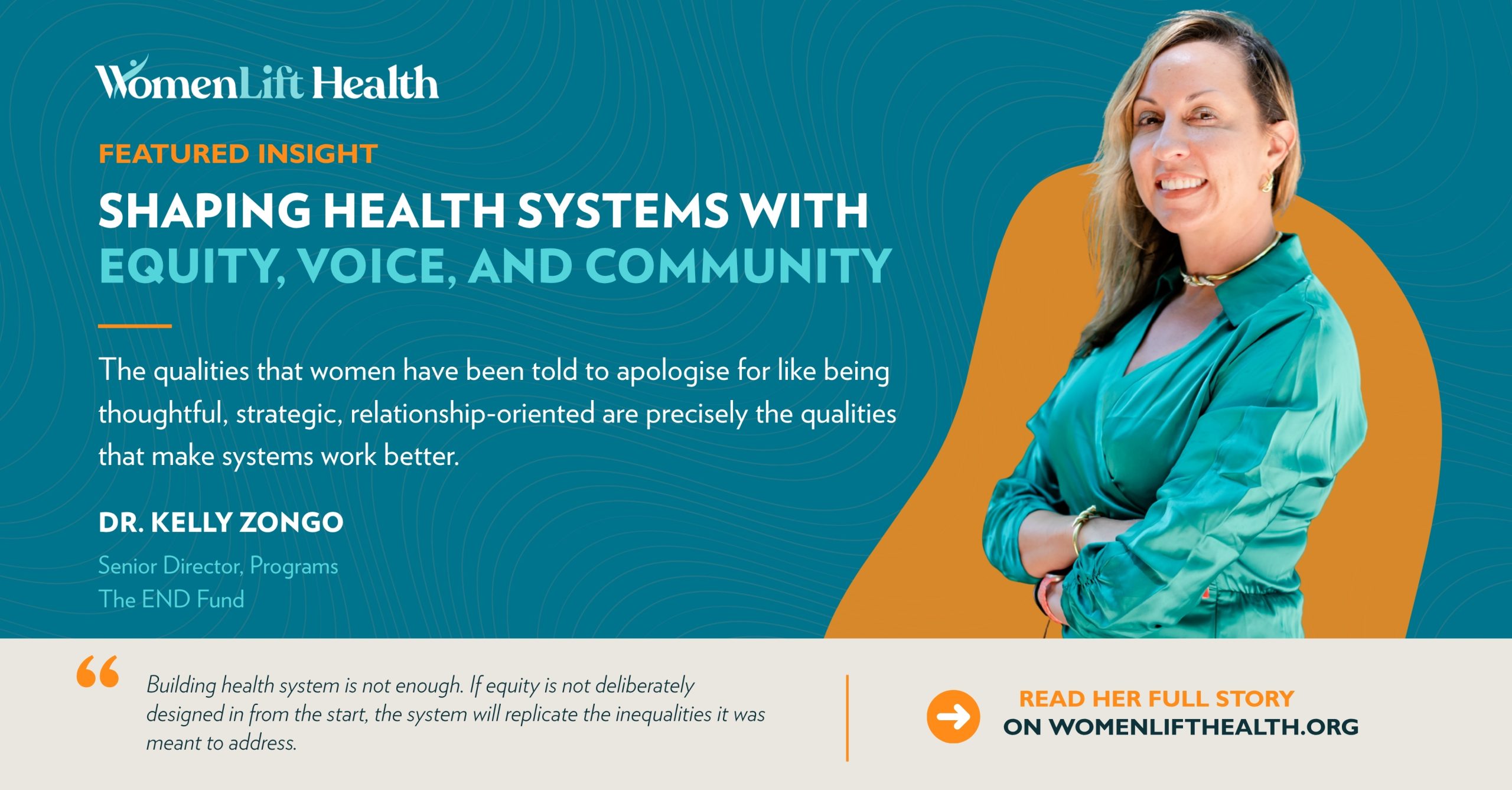
For communities bearing the greatest burden of Neglected Tropical Diseases (NTDs), access to effective care depends not only on technical solutions, but on who shapes the decisions behind them. Dr. Kelly Zongo works to make sure that the realities of women, communities, and the people closest to the problem are reflected in how programs are designed and delivered.
As Senior Director of International Programs at The END Fund, Kelly leads health system strengthening and disease elimination efforts across several endemic countries, bringing a gender and equity lens to work that often assumes technical solutions are enough. “If you just build the systems, and you’re not deliberate about making sure that women or marginalized people have access to those systems, you risk exacerbating those inequalities,” Kelly shared.
Before the WomenLift Health Leadership Journey, Kelly often second-guessed her voice, despite leading strong technical programs. In rooms with senior stakeholders, she would often defer when someone challenged her ideas. “I was staying in execution mode, rather than fully stepping into leadership,” she reflects. The 360-degree assessment, coaching, and support from her mentorship group and peer network helped her realize that qualities she had been undervaluing — being thoughtful, strategic, relationship-oriented — were her strengths. “It has fundamentally changed how I show up in meetings, in decision-making, and in interviews,” she shared.
The shift is already visible in her work. Recently, Kelly engaged a donor around capacity-building in medical entomology. Drawing on qualitative research from her Leadership project, she made the case for strengthening gender representation and mentorship in the field, where women bring stronger community connections and different perspectives that can shape program design. The donor showed interest and asked her team to submit a funding proposal. Separately, when a top-down decision threatened to disrupt a well-functioning consortium in DRC, Kelly pushed back — presenting her case, staying firm when her concerns were challenged, and facilitating a visit that let the evidence speak for itself. The decision was not only reversed, but the existing program was given a larger budget to work with.
Looking ahead, Kelly is focused not only on contributing within systems, but more actively shaping them — and making sure that gender, equity, and community are built in from the start.