
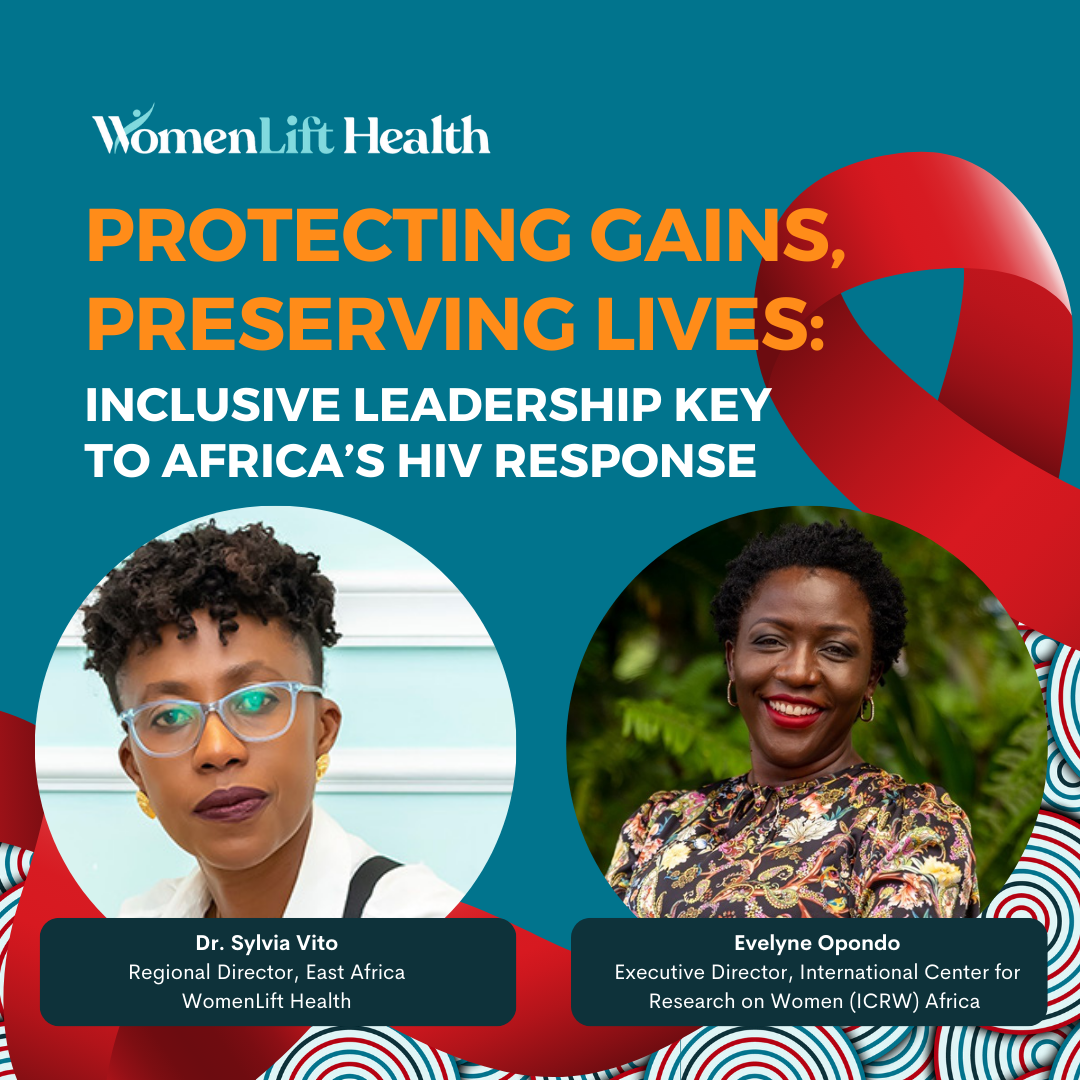
By Dr. Sylvia Vito, Regional Director, East Africa, WomenLift Health, and Evelyne Opondo, Executive Director, International Center for Research on Women (ICRW) Africa
World AIDS Day has traditionally been a time to take stock and reflect on progress and gaps in the fight against HIV. This year however, the day felt different.
Across the continent, many of the systems that have ensured access to HIV treatment and prevention for years are under sustained pressure, and the ripple effects are being felt most sharply by vulnerable populations including women, adolescents, and people living with HIV.
Over the past two decades, Africa’s HIV response has been one of the strongest examples of what determined leadership and collaboration can achieve. Countries expanded treatment, cut deaths, and kept millions of people healthy.
Yet today, service disruptions are illustrating what happens when momentum stalls. Every day, the lives of young women and men across Sub-Saharan Africa are altered by HIV, a consequence not just of information gaps but of the pervasive inequalities that dictate their choices, safety and access to care.
In South Africa, home to roughly eight million people living with HIV, the highest number in the world, the withdrawal of USAID funding in early 2025 left hundreds of thousands of patients and frontline workers in limbo and forced clinics to scramble to keep essential services running. In Kenya, counties have had to stretch already-thin resources to maintain HIV testing, treatment, and prevention for young people and from mothers to their children.
According to the Kenya AIDS Response Progress Report 2025, released on the eve of World AIDS Day, Nairobi recorded the highest number of new infections in the past year. Young people aged 10–24 years accounted for 32 percent of all new HIV infections in the country, with adolescent girls and young women making up 80 percent of new cases in this age group.
Public health experts have attributed the surge in infections to widening gaps in the continuum of HIV care, made wider by “persistent inequality, poverty, gender-based vulnerability and limited health access.”
As the risk of exposure rises in many of our communities, many African countries are caught between a rock and a hard place. In countries like Kenya, Uganda, and Rwanda for example, debt servicing now exceeds half of government revenues, leaving little fiscal space for investments in health. As rising debt competes with national priorities and budgets tighten, HIV programs struggle to keep pace, putting in jeopardy the continent’s fragile progress.
To safeguard our health gains, a new chapter for Africa’s HIV response must begin with clear, gender-responsive investments.
This means protecting services that women and key populations rely on, expanding prevention options, and ensuring community-led organizations remain central, not peripheral, to national strategies. It also means exploring smarter financing approaches: closing tax loopholes, improving health budget allocations, and building resilient, sustainably resourced health systems.
As the stakes rise, we must refuse to lose sight of what has worked. Africa has succeeded before because leadership was bold, and collaboration was visionary, coordinated, and grounded in the realities of people’s lives. That same resolve is needed now, not just to fill gaps in the near term, but to reimagine a stronger, more sustainable HIV response for this and future generations.
This calls for us to build on past successes by making room for inclusive leadership and the benefits it brings to the decision-making table.
Inclusive leadership—especially when women are at the helm—is essential for Africa’s HIV response to remain resilient and effective in the face of mounting challenges. Women-led leadership brings lived experience and a deep understanding of the unique barriers faced by women, adolescents, and marginalized groups, ensuring that HIV prevention and treatment policies are not.
A key prevention opportunity lies ahead. In early 2026, Kenya is set to introduce long-acting injectable pre-exposure prophylaxis (PrEP) Lenacapavir, a twice-yearly option that could transform HIV prevention for adolescent girls, young women, and key populations. Supported by Global Fund financing for free rollout in public facilities, this innovation offers a powerful new tool in the fight against HIV. Ensuring that communities understand, trust, and can easily access this new prevention method will be essential to reducing new infections and strengthening the broader HIV response.
Important to note is that women scientists, health experts, and community leaders, such as Prof. Linda-Gail Bekker, Dr. Moupali Das, and Yvette Raphael, have played critical and multifaceted roles in the development and rollout of Lenacapavir, from designing the pivotal clinical trials to leading community advocacy and shaping global health policy.
When women shape and implement programs, services can become more accessible, stigma can be addressed head-on, and interventions can be tailored to the needs of those most at risk. This approach strengthens trust, fosters innovation, and sustains progress even as external funding wanes and fiscal pressures mount.
By elevating women’s voices and leadership, Africa can safeguard hard-won gains, close persistent gaps in care, and chart a path toward an HIV-free future—fulfilling the promise to protect lives and preserve hope for generations to come.
World AIDS Day 2025 may be in our rear-view mirror now, but its message still stands: protecting our gains is protecting lives.
Our continent has come too far to allow hard-won progress to slip away. This is Africa’s moment to step forward, overcome disruption, and steer the HIV response with confidence. We have a responsibility to create a HIV-free future, and we must do it for the sake of every woman, man, child and young person.