
In Rwanda, some patients with hypertension and diabetes often travel up to three hours to reach primary healthcare facilities. When they arrive, overstretched providers struggle to keep up with patient volume. For many patients, consistent follow-up care is simply out of reach.
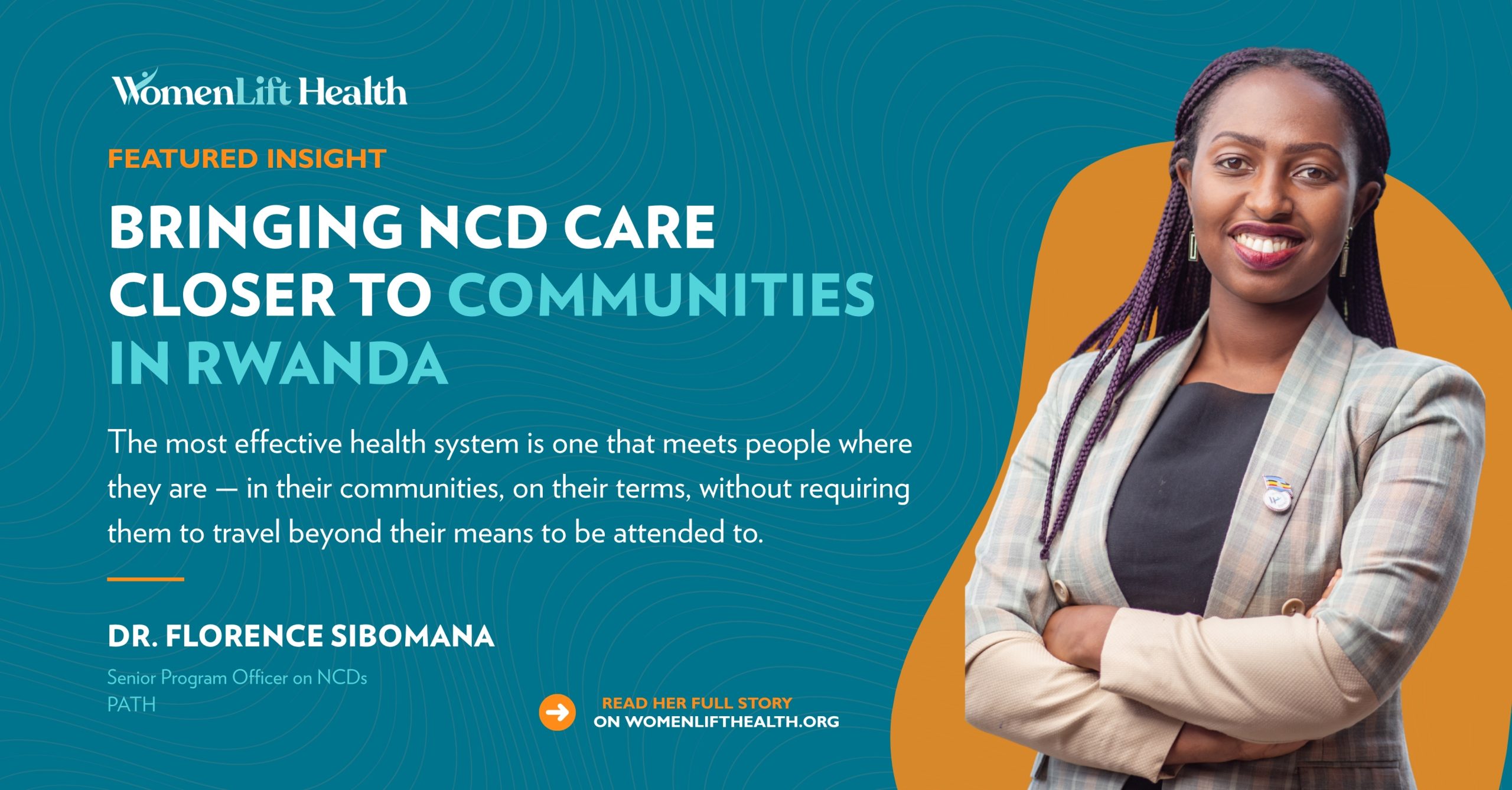
Dr. Florence Sibomana has spent her career working to bring care closer to the people who need it. A medical doctor by training, she spent two years working in hospitals before moving into public health, a path she had been building since she was nine years old, when she represented children in Rwanda’s National Children Summit. Today, as Senior Program Officer for NCDs at PATH Rwanda, she leads community screening for hypertension and diabetes and connects patients to treatment.
Through the WomenLift Health Leadership Journey, Florence strengthened the skills her work demands. A module on building allies helped her to reframe success as a collective endeavor. She began cultivating allies with intention, identifying not only who could support her, but how she could support others as well. The peer network of women leaders became a resource she continues to draw on and contribute to. She also developed a more constructive approach to conflict, learning to engage rather than avoid.
That growth showed up in her work. Florence knew that integrating community health workers into NCD programs could bridge the gap between facilities and patients, but that focus fell outside her donor’s defined scope. She advocated anyway, building the case around quality of care and long-term sustainability until funding was secured. “I decided to advocate for it,” she says, “trying to demonstrate its relevancy, especially on quality of care.”
The results extend beyond a single program. Florence has secured two additional grants, contributing to PATH’s decision to open an operating office in Rwanda. She has also been elected Deputy Chief Commissioner of the Rwanda Girl Guide Association, a role she says she would previously have considered out of reach.